
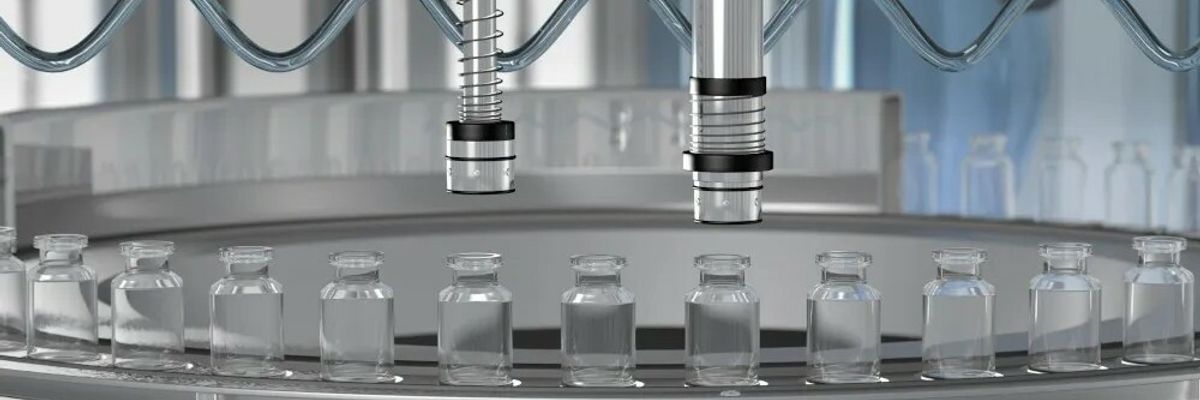
Challenges in Pharmaceutical Bottle Sealing
In pharmaceutical manufacturing ensuring the integrity of bottle sealing is critical for product safety and compliance with strict industry regulations. Induction sealing is widely used to bond an aluminum foil layer to the bottle opening creating an airtight and tamper evident seal
However achieving a uniform and complete seal is challenging especially in high-speed production environments. The sealing process occurs rapidly and involves a very small measurement area making it difficult to verify seal quality in real time
Defects such as incomplete sealing gaps or overheating can compromise product integrity leading to contamination leakage or reduced shelf life. In many cases these issues are only detected later in the production process resulting in costly rework waste or even product recalls
Traditional inspection methods lack real-time feedback and visual confirmation making early detection of sealing defects nearly impossible without interrupting production
Understanding the Induction Sealing Process
Induction sealing involves multiple material layers including wax aluminum foil and a backing layer that must be heated precisely to create a proper seal
The induction system generates heat through electromagnetic fields causing the wax layer to melt and bond the foil to the bottle opening. This process must be carefully controlled to ensure consistent heat distribution across the sealing surface
Any variation in temperature can result in incomplete bonding or damage to the materials. Due to the speed of production lines identifying such variations during the process is extremely difficult without advanced monitoring solutions
Real-Time Defect Detection with Infrared Monitoring
Infrared monitoring provides a powerful non-contact solution for detecting sealing defects in real time. By measuring the temperature of the bottle cap immediately after induction sealing manufacturers can identify inconsistencies in heat distribution
Thermal imaging allows visualization of temperature patterns across the cap surface making it possible to detect incomplete seals or areas that did not receive sufficient heat
This real-time feedback enables immediate corrective actions ensuring that defective bottles are identified before reaching the final stages of production
Unlike manual inspection infrared monitoring operates continuously without slowing down the production line providing reliable and automated quality control
Advanced Solution with Optris Xi400 Infrared Camera
A key technology used in this application is the Optris Xi400 infrared camera which is specifically designed for high-speed industrial processes
The Xi400 offers a high frame rate of 80 Hz allowing it to capture rapid temperature changes as bottles move through the sealing station. This ensures clear and accurate thermal images without motion blur even in fast production environments
Installed above the induction sealing system the camera monitors the heat transfer from the aluminum foil to the plastic cap immediately after sealing. It analyzes multiple zones on the cap surface to ensure consistent temperature distribution and proper sealing
The system is integrated with the Optris PI NetBox which eliminates the need for an external computer simplifying installation and reducing system complexity
Thermal data is processed using PIX Connect software which evaluates temperature values in real time. If any measured zone falls below the defined threshold the system triggers an alarm and automatically rejects the defective bottle from the production line
The Event Grabber function captures thermal images at critical moments allowing operators to review and analyze the sealing process. This feature supports quality assurance and enables detailed investigation of potential defects
Seamless Integration and Process Automation
The infrared monitoring system can be easily integrated into existing pharmaceutical production lines without major modifications
Its automated operation ensures that every bottle is inspected consistently without human intervention reducing the risk of errors and improving overall efficiency
The system communicates directly with production control units enabling immediate response to detected defects and ensuring that only properly sealed products continue through the process
This seamless integration supports high production speeds while maintaining strict quality standards
Reducing Waste and Ensuring Product Safety
Implementing infrared monitoring significantly reduces waste and operational costs by detecting defects at an early stage
Faulty bottles are removed before further processing minimizing material loss and eliminating the need for rework
At the same time the system enhances product safety by ensuring that every bottle meets sealing requirements reducing the risk of contamination or leakage
Stored thermal data also enables traceability allowing manufacturers to analyze past production and optimize processes for improved consistency
Detecting sealing defects in pharmaceutical bottles is essential for maintaining product safety quality and compliance
Infrared monitoring provides a reliable real-time solution that enables early detection of defects without interrupting production
With advanced technologies such as the Optris Xi400 infrared camera PI NetBox and PIX Connect software manufacturers can achieve precise monitoring automated quality control and improved operational efficiency
By integrating infrared thermal monitoring into sealing processes companies can reduce defects minimize waste and ensure the highest standards of product integrity across all production stages


