
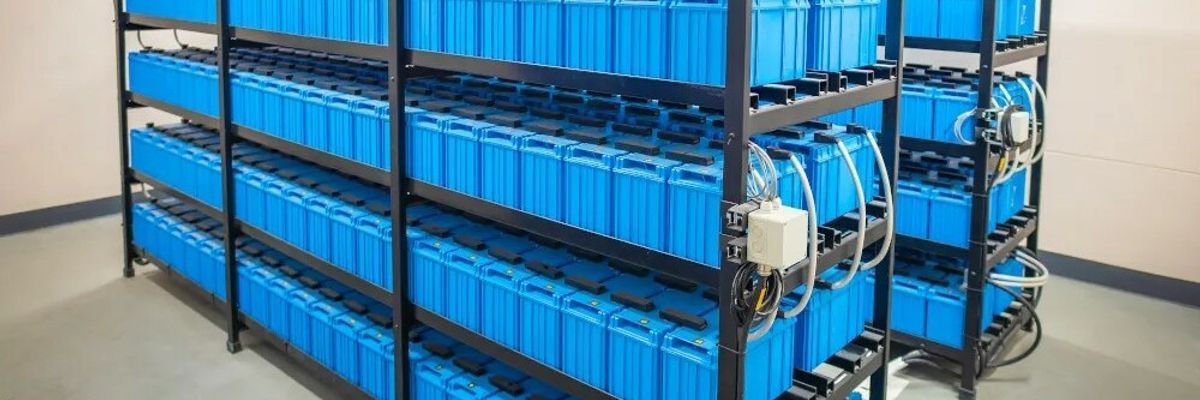
Lithium-ion batteries play a central role in modern energy systems, supporting electrification across transport, industry, and renewable energy storage. Their high energy density, efficiency, and long lifecycle make them indispensable for a wide range of applications. However, alongside these advantages comes a significant safety challenge — the risk of thermal runaway.
As battery deployment continues to grow, especially in large-scale storage systems and manufacturing environments, the need for advanced monitoring solutions becomes critical. Early detection of thermal anomalies is essential to prevent failures, reduce fire risks, and ensure safe operation throughout the battery lifecycle.
Understanding Thermal Runaway in Lithium-Ion Batteries
Thermal runaway is a self-accelerating process in which a battery cell experiences an uncontrollable increase in temperature. This phenomenon is typically triggered when internal or external conditions cause the cell temperature to exceed a critical threshold.
At its initial stage, thermal runaway begins with a gradual temperature rise, often caused by internal defects, contamination, or mechanical damage. External factors such as overcharging, high ambient temperatures, or physical stress can also initiate the process.
As temperature increases, exothermic chemical reactions begin within the cell. These reactions generate additional heat, further accelerating the temperature rise. Once a critical point is reached, the process becomes self-sustaining, leading to rapid heating, gas generation, and in severe cases, fire or explosion.
Importantly, thermal runaway does not occur instantly. It develops through identifiable stages, starting with subtle thermal deviations that can be detected before reaching dangerous levels. This creates an opportunity for early intervention if appropriate monitoring technologies are in place.
Limitations of Traditional Fire Detection Methods
Conventional fire detection systems, such as smoke detectors or heat sensors, are designed to respond to events after combustion has already begun. While effective in detecting active fires, these systems are inherently reactive.
They are unable to identify early-stage thermal anomalies that precede thermal runaway. As a result, by the time an alarm is triggered, the battery may already be in an advanced state of decomposition, leaving limited options for safe mitigation.
In addition, sensor placement and environmental conditions can affect detection reliability. In large facilities, storage areas, or high-airflow environments, smoke or heat may not be detected quickly enough to prevent escalation.
For high-density battery systems, relying solely on reactive detection methods introduces significant safety risks and limits the ability to prevent incidents before they occur.
Infrared Thermal Monitoring as a Preventive Solution
Infrared thermal imaging offers a fundamentally different approach to battery safety. Instead of detecting fire after ignition, it enables continuous, real-time monitoring of temperature behavior across battery systems.
Thermal cameras capture infrared radiation emitted by objects and convert it into detailed temperature maps. This allows operators to visualize temperature distribution and detect even minor deviations from normal conditions.
In the early stages of thermal runaway, defective cells typically exhibit a slow and localized temperature increase. These changes may be only a few degrees but are critical indicators of underlying issues.
High-precision thermal imaging systems can detect these subtle temperature rises long before traditional sensors respond. This enables operators to take preventive actions, such as cooling the affected cell or isolating it from the system.
Because the technology is non-contact, it is particularly suitable for high-voltage environments where direct measurement is difficult or unsafe.
Challenges in Monitoring Battery Systems
Despite its advantages, thermal monitoring of lithium-ion batteries presents several technical challenges. Battery cells are often densely packed, enclosed, or insulated, which can reduce visible temperature differences between normal and faulty cells.
Additionally, the early stages of thermal runaway involve slow temperature changes that require high measurement accuracy and stability. Standard infrared cameras designed for general surveillance may not provide sufficient precision to detect these gradual trends.
Accurate temperature-calibrated thermal imaging systems are required to reliably identify early-stage anomalies and avoid false alarms.
Spatial resolution is another critical factor. Monitoring large battery arrays requires wide-area coverage, while still maintaining the ability to detect small hotspots. This requires a combination of high-quality optics and appropriate measurement field of view (MFOV).
Infrared Cameras for Early Hotspot Detection
Modern infrared camera systems are specifically designed to address these challenges. By combining high thermal sensitivity with robust industrial design, they enable reliable monitoring in demanding environments.
Thermal cameras can continuously scan battery systems and automatically identify hotspots as soon as temperature deviations occur. Advanced algorithms analyze temperature data in real time, allowing immediate detection of abnormal conditions.
This capability is particularly valuable in applications such as battery storage facilities, production lines, recycling centers, and charging stations, where large numbers of cells must be monitored simultaneously.
By detecting overheating at an early stage, operators can intervene before the onset of thermal runaway, significantly reducing the risk of fire and system failure.
Automated Monitoring and Integration into Safety Systems
One of the key advantages of infrared monitoring is its ability to integrate into automated safety and control systems. Thermal cameras can be connected to monitoring software or industrial control units, enabling continuous supervision without manual intervention.
When a predefined temperature threshold is exceeded or a hotspot is detected, the system can automatically trigger alarms, activate cooling mechanisms, or initiate emergency protocols.
Advanced systems also support fail-safe operation and self-monitoring functions, ensuring reliability even in critical environments. Multiple cameras can be combined into a single monitoring platform, providing full coverage of large facilities.
This level of automation enhances response speed, reduces human error, and ensures consistent safety standards across all monitored areas.
Benefits of Early Thermal Runaway Detection
The implementation of infrared thermal monitoring provides significant benefits for battery manufacturers and operators.
Early detection enables preventive action before thermal runaway develops, reducing the likelihood of fire, explosion, and associated damage. This improves overall safety for personnel and infrastructure.
Continuous monitoring allows for better process control and early identification of defective cells, minimizing production losses and improving product quality.
The non-contact nature of the technology ensures safe operation in high-voltage environments and eliminates the need for complex wiring or intrusive sensors.
In addition, automated monitoring reduces reliance on manual inspection, increases operational efficiency, and supports scalable deployment in large systems.
As lithium-ion batteries become increasingly central to modern energy systems, ensuring their safe operation is more important than ever. Thermal runaway remains one of the most critical risks, particularly in high-density and large-scale applications.
Traditional fire detection methods, while necessary, are not sufficient on their own to prevent incidents. A proactive approach based on continuous thermal monitoring is essential for early detection and risk mitigation.
Infrared thermal imaging provides a powerful and reliable solution for identifying early-stage temperature anomalies, enabling timely intervention and preventing catastrophic failures.
By integrating advanced thermal monitoring systems into battery production, storage, and operation, manufacturers and operators can significantly enhance safety, improve reliability, and support the continued growth of lithium-ion technologies.


